🌏 Taiwan Announces Massive $40 Billion Defence Boost Amid China Tensions
In a bold and sweeping move, Taiwan has unveiled a supplementary defence budget of US $40 billion aimed at strengthening its security posture in the face of growing pressure from People’s Republic of China (PRC). The announcement underscores Taipei’s commitment to safeguarding its sovereignty, democratic governance, and long-term security. Reuters+2Al Jazeera+2
🔐 What the Plan Includes
-
The proposed package would raise defence spending for 2026 to around US $30.3 billion, which is about 3.32% of Taiwan’s GDP, a level not seen since 2009. The Economic Times+1
-
Beyond the fiscal boost, Taiwan plans major new arms purchases from the United States to enhance its asymmetric defence capabilities — including air-defence systems, advanced weaponry, and surveillance and drone technology. Al Jazeera+2Reuters+2
-
As part of the broader vision, Taiwan aims to gradually raise its defence spending to 5% of GDP by 2030, reflecting increased urgency amid rising regional volatility. Al Jazeera+1
🎙️ Why Taiwan Is Doing This
According to Taiwan’s leadership, this initiative is not motivated by aggression but by the need for deterrence — to raise the cost and risks for any potential coercive moves by China. Reuters+1
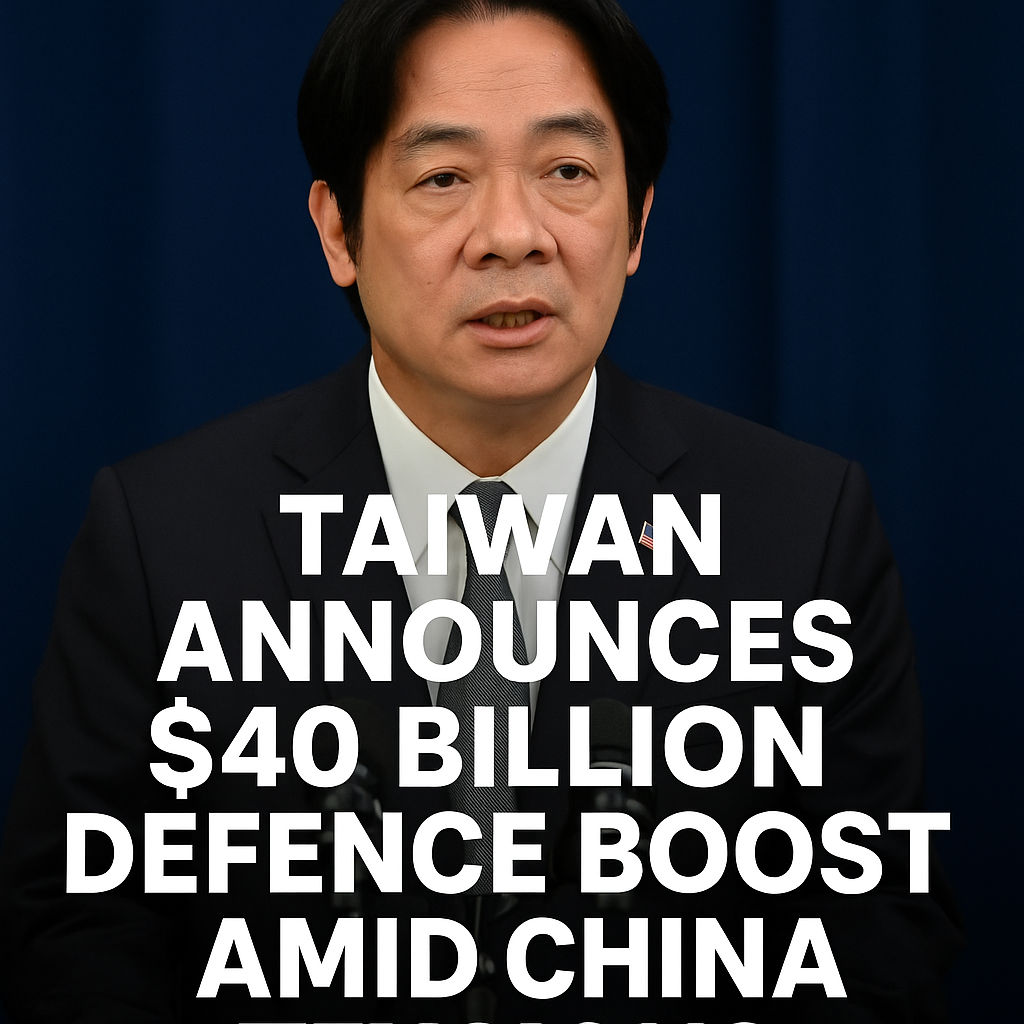
At a press conference announcing the plan, Taiwan’s president emphasized that democratic Taiwan will not compromise on sovereignty or freedom, and stressed that history shows yielding to pressure only invites subjugation. ThePrint+1
Moreover, as diplomatic tensions escalate in the region, Taiwan views the increased defence spending as critical to preserve stability, protect its citizens, and maintain independence. Al Jazeera+1
🌐 International Dimensions & Reaction
-
The move aligns with calls from the United States — a key ally and arms supplier — for Taiwan to take more responsibility for its own defence. Under American law, the U.S. can provide military support to Taiwan, even without formal diplomatic recognition. The Economic Times+1
-
Analysts view this as part of a broader shift in regional security — as nations rethink traditional defence postures in response to evolving threats. Taiwan’s emphasis on asymmetric capabilities (air-defence systems, drones, missiles) reflects lessons from recent global conflicts about the value of mobility and high-tech deterrence even against larger adversaries. Al Jazeera+1
-
On the flip side, the proposal has drawn sharp criticism from China, which views such moves as provocative and claims Taiwan remains part of Taiwan. Beijing’s official rhetoric frames increased Taiwanese military spending as encouragement from external powers and a threat to regional peace. ThePrint+1
⚠️ Challenges & Risks Ahead
While the funding boost is significant, the plan still faces several hurdles:
-
Approval: The budget needs to pass through Taiwan’s parliament, which includes opposition parties expressing concern over heavy borrowing and long-term economic burden. Reuters+1
-
Diplomatic Fallout: The move may escalate tensions in the region, provoking backlash from China — potentially making Taiwan more isolated or vulnerable diplomatically.
-
Security vs. Growth Tradeoff: Large defence spending might divert resources from social and economic programs, affecting long-term domestic development priorities.
-
Uncertain Deterrence Outcome: While an expanded military capability may deter aggression, it does not guarantee security — strategic decisions by rival powers remain unpredictable.
📰 What This Means Going Forward
For Taiwan, this decision marks a shift toward self-reliance and preparedness. The island is signalling that it will invest in advanced defence systems and technological deterrence to protect democratic institutions and its people.
For the region — and the world — this may reshape security calculations in East Asia: an increasingly militarized Taiwan could influence how neighboring countries — and global powers — respond to tensions in the Taiwan Strait.
For global watchers, Taiwan’s move is a reminder that in a fast-changing geopolitical environment, smaller democracies are increasingly willing to invest heavily in self-defence. 🌍
🌏 Taiwan Announces Massive $40 Billion Defence Boost Amid China Tensions
In a bold and sweeping move, Taiwan has unveiled a supplementary defence budget of US $40 billion aimed at strengthening its security posture in the face of growing pressure from People’s Republic of China (PRC). The announcement underscores Taipei’s commitment to safeguarding its sovereignty, democratic governance, and long-term security. Reuters+2Al Jazeera+2
🔐 What the Plan Includes
-
The proposed package would raise defence spending for 2026 to around US $30.3 billion, which is about 3.32% of Taiwan’s GDP, a level not seen since 2009. The Economic Times+1
-
Beyond the fiscal boost, Taiwan plans major new arms purchases from the United States to enhance its asymmetric defence capabilities — including air-defence systems, advanced weaponry, and surveillance and drone technology. Al Jazeera+2Reuters+2
-
As part of the broader vision, Taiwan aims to gradually raise its defence spending to 5% of GDP by 2030, reflecting increased urgency amid rising regional volatility. Al Jazeera+1
🎙️ Why Taiwan Is Doing This
According to Taiwan’s leadership, this initiative is not motivated by aggression but by the need for deterrence — to raise the cost and risks for any potential coercive moves by China. Reuters+1
At a press conference announcing the plan, Taiwan’s president emphasized that democratic Taiwan will not compromise on sovereignty or freedom, and stressed that history shows yielding to pressure only invites subjugation. ThePrint+1
Moreover, as diplomatic tensions escalate in the region, Taiwan views the increased defence spending as critical to preserve stability, protect its citizens, and maintain independence. Al Jazeera+1
🌐 International Dimensions & Reaction
-
The move aligns with calls from the United States — a key ally and arms supplier — for Taiwan to take more responsibility for its own defence. Under American law, the U.S. can provide military support to Taiwan, even without formal diplomatic recognition. The Economic Times+1
-
Analysts view this as part of a broader shift in regional security — as nations rethink traditional defence postures in response to evolving threats. Taiwan’s emphasis on asymmetric capabilities (air-defence systems, drones, missiles) reflects lessons from recent global conflicts about the value of mobility and high-tech deterrence even against larger adversaries. Al Jazeera+1
-
On the flip side, the proposal has drawn sharp criticism from China, which views such moves as provocative and claims Taiwan remains part of Taiwan. Beijing’s official rhetoric frames increased Taiwanese military spending as encouragement from external powers and a threat to regional peace. ThePrint+1
⚠️ Challenges & Risks Ahead
While the funding boost is significant, the plan still faces several hurdles:
-
Approval: The budget needs to pass through Taiwan’s parliament, which includes opposition parties expressing concern over heavy borrowing and long-term economic burden. Reuters+1
-
Diplomatic Fallout: The move may escalate tensions in the region, provoking backlash from China — potentially making Taiwan more isolated or vulnerable diplomatically.
-
Security vs. Growth Tradeoff: Large defence spending might divert resources from social and economic programs, affecting long-term domestic development priorities.
-
Uncertain Deterrence Outcome: While an expanded military capability may deter aggression, it does not guarantee security — strategic decisions by rival powers remain unpredictable.
📰 What This Means Going Forward
For Taiwan, this decision marks a shift toward self-reliance and preparedness. The island is signalling that it will invest in advanced defence systems and technological deterrence to protect democratic institutions and its people.
For the region — and the world — this may reshape security calculations in East Asia: an increasingly militarized Taiwan could influence how neighboring countries — and global powers — respond to tensions in the Taiwan Strait.
For global watchers, Taiwan’s move is a reminder that in a fast-changing geopolitical environment, smaller democracies are increasingly willing to invest heavily in self-defence. 🌍
What do you feel about this post?

Like

Love

Happy

Haha

Sad